Blog / Tires

What Tires Fit the 2026 Cadillac Escalade?

What Tires Fit the 2026 Cadillac Escalade

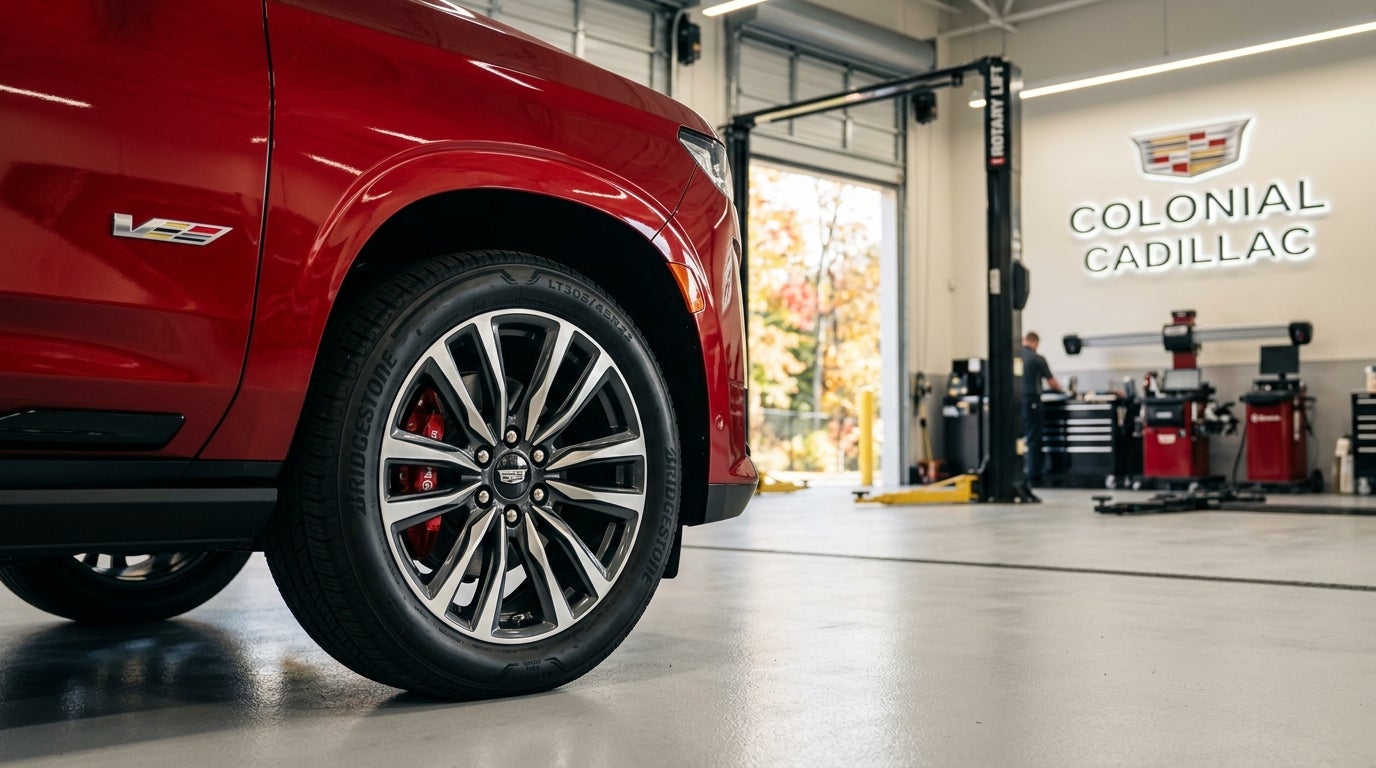
The standard tire fitment for the 2026 Cadillac Escalade is 275/50R22 on 22-inch wheels across major trims including Luxury, Premium Luxury, Premium Luxury Platinum, Sport, and Sport Platinum. Models equipped with available 24-inch factory wheel packages require 285/40R24 tires, while the factory temporary spare tire size is 265/70R17SL. All primary tire options must maintain an Extra Load rating to support vehicle weight.

Understanding tire sizing nomenclature ensures correct replacement selections for full-size luxury SUVs:

  • Section Width: The figure 275 represents the tire's width in millimeters from sidewall to sidewall.
  • Aspect Ratio: The number 50 indicates that the sidewall height equals 50 percent of the section width.
  • Construction: The letter R designates radial ply construction.
  • Rim Diameter: The figure 22 specifies the rim diameter in inches.

The 2026 Cadillac Escalade utilizes a 6x139.7mm (6x5.5 inches) wheel bolt pattern with a 78.1mm center bore and a positive offset between +24mm and +28mm. Maintaining exact overall tire diameter across wheel size options prevents electronic speedometer calibration drift, transmission shift timing errors, and driver-assist system disengagements.

Before purchasing new tires, vehicle owners should inspect the driver-side B-pillar tire and loading information placard to verify factory specifications. To discuss tire inventory or confirm vehicle fitment with factory-trained technicians, visit our Woburn service facility or give our service department a quick call to verify current stock.

Table of Contents

What Are the Required Load, Speed, and UTQG Ratings for Escalade Tires?

Cadillac Escalade replacement tires require an Extra Load rating with a load index of 115 or 116, supporting up to 2,756 pounds per tire, along with a minimum speed rating of H (130 mph) or V (149 mph). Factory original equipment tires carry a Uniform Tire Quality Grading treadwear rating between 500 and 640.

Because the Escalade is a large, body-on-frame luxury vehicle equipped with a 6.2L V8 engine and a 10-speed automatic transmission, curb mass ranges between 5,800 and 6,000 pounds before adding passengers or cargo. Standard Load tires lack the structural sidewall reinforcement necessary to handle these high vertical and lateral forces. Fitting an Extra Load (XL) tire ensures that structural integrity, cornering stability, and emergency braking distances remain within factory safety parameters when towing up to 8,100 pounds.

Tire performance categories for full-size luxury vehicles depend heavily on standardized sidewall ratings:

  • Load Index (115–116): Guarantees dynamic weight capacity for full passenger seating and heavy trailering.
  • Speed Rating (H or V): Indicates continuous heat dissipation capability under sustained highway driving speeds.
  • Treadwear Rating (500–640): Measures relative tread life expectancy under standardized test conditions.
  • Traction Rating (AA or A): Represents wet-surface straight-line braking capability on asphalt and concrete.
  • Temperature Rating (A): Certifies resistance to internal heat generation under heavy loads.

Selecting tires that meet or exceed these parameters prevents premature tire shoulder breakdown and preserves the smooth ride characteristics associated with factory chassis tuning.

Do 22-Inch Factory Escalade Tires Handle Winter Driving and Snow in Boston?

Factory 275/50R22 all-season tires deliver adequate traction in light snow, but dedicated winter tires provide significantly shorter stopping distances and improved lateral grip during cold weather and heavy slush. The standard all-season rubber compound stiffens in temperatures below 45 degrees, reducing rubber flexibility and asphalt adhesion.

Drivers navigating urban pavement around Boston during winter encounter road salt, packed snow, and sudden temperature drops. While all-season tread designs feature circumferential grooves to channel water and thin slush away from the contact patch, their tread blocks lack the deep siping required to bite into packed snow or icy surfaces. Furthermore, wide 275mm tread profiles tend to float over deep slush rather than cutting down to solid pavement.

Installing dedicated winter tires on 22-inch wheels or downsizing to a dedicated 20-inch winter wheel-and-tire package offers distinct driving advantages:

  • Hydrophilic Tread Compounds: Remain flexible in sub-zero conditions to maximize tire contact area.
  • High-Density Siping: Creates thousands of microscopic biting edges that trap snow particles for snow-on-snow traction.
  • Slush-Clearing Channels: Wide lateral shoulder grooves push dense, slushy accumulation away from the tire centerline.

Vehicle owners in cold-winter regions should regularly rinse tire tread and wheel assemblies to remove road salt brine, protecting alloy rims and TPMS valve stems from oxidation.

How Much Does a Full Set of Replacement Tires Cost for a Cadillac Escalade vs. Lincoln Navigator?

A complete set of four replacement 22-inch tires for a 2026 Cadillac Escalade in Boston typically costs between $1,150 and $1,850 before installation fees, while high-performance 24-inch fitments range from $1,600 to $2,400. Replacement tire costs for the Lincoln Navigator fall into a virtually identical range of $1,200 to $1,800 per set due to shared standard 22-inch wheel dimensions.

Comparing maintenance expenses between competing full-size luxury SUVs reveals equivalent long-term tire investment requirements:

Vehicle Standard Tire Size Typical Set Cost Range (22-Inch) High-Performance Option Cost (24-Inch)
Cadillac Escalade 275/50R22 $1,150 – $1,850 $1,600 – $2,400
Lincoln Navigator 285/45R22 $1,200 – $1,800 N/A

Both luxury platforms utilize reinforced XL tire casings engineered for quiet operation, heavy curb mass, and high towing limits. Price variances within each model range depend primarily on brand positioning, mileage warranty lengths, and specific tread categories such as highway touring, ultra-high-performance, or dedicated winter tires. Purchasing high-grade OEM-spec replacement tires preserves factory ride isolation and dampens road noise.

What Do Mounting, Balancing, and Disposal Cost?

Professional tire mounting, high-speed computerized balancing, new valve stems, and tire disposal fees generally add $30 to $50 per wheel, totaling $120 to $200 for a set of four tires. Combining tire installation with a comprehensive four-wheel suspension alignment protects new tread investment against premature scrubbing.

Mounting wide-aspect 22-inch or 24-inch luxury tires requires specialized tire machines equipped with touchless mounting heads to protect polished alloy wheel lips from scratches. Computerized road-force balancing places weight correctors along the inner rim to eliminate rotational high spots that cause high-speed steering wheel shimmy.

Installation procedures include essential shop services:

  • Touchless Mounting: Prevents mechanical contact between steel tools and sensitive alloy rim flanges.
  • Dynamic Balancing: Calibrates rotational symmetry across vertical and horizontal planes.
  • TPMS Service: Replaces rubber grommets and resets electronic dashboard monitoring systems.
  • Environmental Disposal: Ensures compliant recycling of old casing materials.

Commuters driving over the rolling residential hills around Belmont experience continuous suspension movement from varying road surfaces. Scheduling a four-wheel alignment during new tire installation ensures the chassis tracks straight and prevents uneven inner-shoulder wear.

Where Can You Confirm Cadillac Escalade Tire Availability and Installation?

Cadillac Escalade tire availability, factory fitments, and professional installation can be confirmed directly through our service center at Colonial Cadillac of Woburn, located at 201 Cambridge Road in Woburn. Our service facility maintains high-capacity vehicle lifts and factory calibration equipment specifically designed for full-size luxury chassis.

Factory-trained service technicians perform tire replacements using GM-approved tire changers, precision balancers, and alignment software matched to advanced suspension systems like Magnetic Ride Control and electronic air leveling. Replacing tires at an authorized service facility ensures that electronic steering angle sensors and chassis control modules are zeroed to original factory parameters.

Our service department maintains a broad inventory of approved 275/50R22 and 285/40R24 replacement tires matching original load indices and speed ratings. When vehicle owners bring full-size luxury SUVs in for routine inspections, our technicians evaluate tread depth profiles across all four wheels to spot subtle alignment drift before uneven wear damages a fresh tire set.

Common Questions About Cadillac Escalade Tire Service and Maintenance

Q: How often should Cadillac Escalade tires be rotated?

Cadillac Escalade tires should be rotated every 7,500 miles or during every scheduled engine oil change. Routine tire rotations distribute front steering forces and rear torque loads evenly across all four positions, extending overall tread life and preventing irregular shoulder wear on heavy full-size SUVs.

Q: Can 24-inch wheels be mounted on an Escalade that came with 22-inch tires?

Yes, 24-inch wheels wrapped in 285/40R24 tires can be mounted on an Escalade originally equipped with 22-inch wheels. Because the lower-profile aspect ratio maintains equivalent overall rolling diameter, electronic speedometer calibration, odometer tracking, and transmission shift schedules remain accurate.

Q: How does tire misalignment affect Super Cruise on the Cadillac Escalade?

Physical suspension misalignment forces steering angle sensors to detect continuous mechanical drift while traveling straight. Because Super Cruise relies on precise steering position feedback and thrust line tracking, severe alignment drift can trigger system disengagements or restrict hands-free availability until a physical four-wheel alignment and electronic sensor calibration are completed.

Q: Does the Cadillac Escalade include a full-size spare tire?

The Cadillac Escalade includes a space-saver temporary spare tire sized 265/70R17SL mounted under the rear cargo floor. While designed for low-speed emergency transport to a service facility, it should be replaced with a standard 275/50R22 tire promptly to restore full load-carrying capacity and handling safety.

Q: What is the recommended cold inflation pressure for 22-inch Escalade tires?

The recommended cold tire inflation pressure for factory 275/50R22 tires on a Cadillac Escalade is typically 36 PSI, as stated on the driver-side door jamb tire information label. Maintaining proper cold inflation pressure prevents center-tread wear, preserves fuel efficiency, and protects rim lips from road impacts.

Schedule Cadillac Escalade Tire Service in Woburn

Maintaining correct tire sizing, load ratings, and inflation pressures ensures your Cadillac Escalade delivers the smooth ride, precise tracking, and towing safety designed into its chassis. Routine tire rotations paired with periodic wheel alignments protect your tire investment against premature wear caused by harsh pavement joints and seasonal road hazards.

When you notice steering pull, wheel vibration, or uneven tread wear across your 22-inch or 24-inch tires, our service team is equipped to inspect, balance, align, or replace your tires with factory-approved fitments. To confirm tire availability or arrange your next service visit, get directions to our Woburn service center, reach our technicians directly by calling (781) 935-7000, or easily schedule a service appointment online today.


© 2026 Colonial Cadillac of Woburn. All rights reserved.
Posted in:

Related Posts

How Often Do 2026 Cadillac Models Need Fluid Flushes

How Often Do 2026 Cadillac Models Need Fluid Flushes?

Cadillac models typically require engine oil changes every 7,500 miles, coolant flushes between 30,000 and 60,000 miles, transmission fluid service between 60,000 and 90,000 miles, and differential fluid service starting at 90,000 miles. Brake fluid requires routine inspection and service based on chemical degradation rather than fixed mileage alone. Operating under severe New England driving conditions, such as frigid winter temperatures, road salt, and frequent stop-and-go travel, accelerates these recommended maintenance intervals. Every modern Cadillac vehicle relies on specialized hydraulic and thermal fluids to protect high-precision powertrain assemblies. Engine oil neutralizes combustion byproducts while lubricating internal components, monitored continuously by the onboard Oil Life System. Coolant maintains engine operating temperature while preventing internal corrosion within the aluminum engine block and radiator core. Hydraulic brake fluid translates pedal force into mechanical stopping power, and automatic transmission fluid manages thermal loads while lubricating complex gear sets and planetary clutch packs. The routine maintenance schedule for modern Cadillac sedans and SUVs follows distinct operational windows: Engine Oil and Filter: Replaced every 7,500 miles or when triggered by the internal monitoring software. Engine Coolant (DEX-COOL): Inspected during routine visits and flushed between 30,000 and 60,000 miles depending on model specifications. Automatic Transmission Fluid: Serviced between 60,000 and 90,000 miles under standard driving schedules. Front and Rear Differential Fluid: Inspected regularly and replaced around 90,000 miles on applicable all-wheel-drive platforms. Brake Fluid: Evaluated during multi-point inspections for moisture absorption and thermal breakdown. Commuters driving from suburban communities like Belmont into urban centers often subject their vehicles to severe operating cycles. Short journeys in cold weather prevent fluids from reaching full operating temperature, allowing moisture to collect in crankcases and fluid reservoirs. Scheduling preventative inspections at our Woburn service center ensures these critical systems are tested before thermal degradation leads to mechanical wear. Drivers can also speak directly with our service desk by calling our team (781) 935-7000 to review vehicle maintenance histories. Table of Contents What Are the Signs That a Cadillac Needs an Immediate Brake Fluid Flush? When Is a Fluid Top-Up Sufficient Compared to Needing a Full Flush? What Happens If You Delay a Coolant Flush on a Cadillac Escalade or XT5? Is a Transmission Fluid Flush More Expensive on Cadillac AWD and 4WD Models? How Often Does the Battery Coolant Need to Be Flushed on a Cadillac EV? Common Questions About Cadillac Fluid Top-Ups and Flushes Schedule Official Cadillac Fluid Service Near Boston What Are the Signs That a Cadillac Needs an Immediate Brake Fluid Flush? A Cadillac requires an immediate brake fluid flush if the brake pedal feels soft or spongy, stopping distances increase unexpectedly, the fluid in the master cylinder reservoir turns dark brown or black, or an ABS warning light appears on the instrument cluster. Hydraulic brake fluid is naturally hygroscopic, meaning it continuously absorbs water moisture directly from surrounding ambient air through micro-pores in rubber brake lines. Over time, absorbed water lowers the boiling point of glycol-based DOT 4 brake fluid. During hard braking or descending steep grades, thermal energy generated at the brake rotors transfers into the calipers. If moisture content inside the fluid exceeds acceptable limits, heat turns that water into compressible steam pockets within the brake lines. This vapor lock prevents hydraulic pressure from reaching the calipers, producing a dangerously long pedal stroke. Indicator Early Stage Warning Advanced System Defect Recommended Immediate Action Pedal Feel Slight increase in travel before engagement Soft, spongy, or pedal sinks to floorboard Hydraulic line pressure test and fluid flush Fluid Appearance Clear amber turns to dark yellow Dark brown or cloudy with particulate matter Master cylinder reservoir flush and fresh fluid refill Stopping Performance Minor loss in initial pedal bite Noticeable delay in vehicle deceleration Full system flush and caliper seal inspection Dashboard Lights Intermittent stability control alerts Solid Brake System or ABS indicator light Diagnostic scan and complete brake system service Contaminated brake fluid also damages internal anti-lock braking actuators and precision valve blocks. Moisture causes internal oxidation on steel pistons within caliper bores, accelerating seal deterioration and risking expensive hydraulic component failures. Drivers experiencing any change in pedal feedback can schedule a multi-point inspection using our online service scheduler to verify fluid condition and hydraulic system integrity. When Is a Fluid Top-Up Sufficient Compared to Needing a Full Flush? A fluid top-up is sufficient when system fluid drops slightly due to minor thermal expansion or routine usage while retaining its original clarity, color, and chemical properties. A complete fluid flush is required when fluid exhibits thermal breakdown, heavy discoloration, suspended debris, or when the vehicle reaches manufacturer mileage milestones. Understanding the operational differences between these two maintenance procedures helps owners protect key mechanical assemblies: Fluid Top-Up: Involves adding fresh, factory-approved fluid directly into a reservoir to restore proper fill levels. This process corrects minor fluid loss caused by normal operation or slight evaporation without clearing out old, aged fluid from deeper hydraulic channels. Fluid Flush: Utilizes professional exchange equipment to push out old fluid from internal galleries, torque converters, lines, and heat exchangers. Fresh fluid is introduced concurrently, flushing out suspended metallic micro-particles, oxidized sludge, and degraded chemical additives. Our service advisors notice that commuters who travel along high-density traffic corridors often ask whether a quick reservoir top-up is enough after seeing a low fluid level message. Adding fresh fluid to contaminated or burnt fluid does not restore lost protective properties. Fresh oil or coolant mixed into degraded fluids quickly oxidizes, leaving vital internal gears, pumps, and engine passages exposed to friction and excess heat. What Happens If You Delay a Coolant Flush on a Cadillac Escalade or XT5? Delaying a coolant flush on a Cadillac Escalade or XT5 in Boston causes anti-corrosion additives within DEX-COOL silicate-free coolant to break down, allowing rust, scale, and organic deposits to form throughout the cooling system. As these protective compounds degrade, the engine cooling circuit transitions from an anti-corrosive state to an acidic fluid environment. Modern Cadillac V6 and V8 engines utilize multi-metal cooling circuits featuring aluminum cylinder heads, composite radiator tanks, and brass heater cores. Acidic coolant creates galvanic corrosion between these dissimilar metals. Microscopic metal debris strips off internal engine jackets and lodges inside narrow radiator tubes, restricting heat dissipation. This restricted flow elevates engine head temperatures, increasing the risk of head gasket warping or block damage. In heavy urban driving through Boston, elevated engine temperatures put excessive stress on auxiliary cooling fans, water pump bearings, and cabin heater cores. Corrosive coolant deteriorates water pump shaft seals, causing premature coolant leaks that can lead to sudden thermal loss. Replacing engine coolant at factory-specified intervals eliminates acidic buildup and preserves the heat exchanger efficiency required during summer heat waves and winter defroster operation. Is a Transmission Fluid Flush More Expensive on Cadillac AWD and 4WD Models? A transmission fluid flush on Cadillac AWD and 4WD models is generally more comprehensive than on two-wheel-drive configurations because full driveline service involves inspecting and servicing transfer cases along with front and rear differential assemblies. While standard two-wheel-drive models only require servicing a single automatic transmission fluid loop, all-wheel-drive platforms utilize multiple complex fluid reservoirs. Driveline Component Primary Lubricant Type Function in Driveline Servicing Requirement Automatic Transmission DEXRON VI / Specialized Automatic Transmission Fluid Manages gear ratios and torque converter operation Flush pan, replace filter, and exchange internal fluid Transfer Case High-Viscosity Transfer Case Fluid Transfers drive torque between front and rear axles Drain and refill fluid; inspect seals for leakage Front Differential Synthetic Gear Lubricant Drives front wheels on all-wheel-drive sedans and SUVs Inspect fluid quality; replace at specified intervals Rear Differential / Twin-Clutch Specialized Synthetic Gear Oil Handles rear torque vectoring and wheel differential Drain fluid, replace friction modifiers if equipped Modern electronic all-wheel-drive systems, such as twin-clutch rear drivelines found across luxury crossovers, rely on precise fluid viscosity to engage active clutch packs smoothly. Contaminated driveline fluid causes clutch chatter, hesitation during torque transfer, and accelerated mechanical wear across internal differential ring and pinion gears. Servicing every driveline component simultaneously ensures consistent power delivery across all four wheels. How Often Does the Battery Coolant Need to Be Flushed on a Cadillac EV? Cadillac electric vehicles require battery thermal management coolant replacement between 5 years or 75,000 miles and 150,000 miles, depending on the specific battery architecture and thermal loop design outlined in the owner's manual. Unlike internal combustion engines, electric vehicles use specialized low-conductivity coolant to maintain exact operating temperatures across large high-voltage battery arrays. The thermal management system in an electric vehicle regulates battery cell temperatures during fast-charging sessions and intense power delivery. Low-conductivity coolant circulates through cooling plates embedded beneath the battery modules, absorbing heat and venting it through front-mounted radiators. Over time, chemical breakdown can increase the electrical conductivity of the fluid or reduce its heat-transfer efficiency. Flushing battery coolant requires specialized equipment to purge air pockets completely from intricate cooling plates. Trapped air pockets create localized hot spots across individual battery cells, which can trigger thermal throttling during fast DC charging or reduce overall driving range. Adhering to manufacturer guidelines preserves battery health and ensures maximum charging speeds throughout the vehicle's lifespan. Common Questions About Cadillac Fluid Top-Ups and Flushes Q: How can a driver tell if transmission fluid is degraded before shifting issues start? Fresh automatic transmission fluid features a bright pink or red color with a clean, slightly sweet smell. As heat and friction break down the fluid over thousands of miles, it turns dark brown or black and develops a distinct burnt odor. Inspecting fluid color during routine maintenance visits catches thermal degradation before slipping gears, harsh engagement, or transmission diagnostic codes occur. Q: Does Cadillac Premium Care Maintenance cover routine fluid flushes? Cadillac Premium Care Maintenance covers factory-recommended routine maintenance services during the initial coverage period, including engine oil changes, tire rotations, and select multi-point inspections. Specialized fluid flushes, such as complete transmission or differential fluid exchanges that fall outside initial complimentary maintenance windows, are serviced as recommended owner maintenance items. Q: Can low power-steering fluid cause noise on modern Cadillac models? Many newer Cadillac vehicles utilize electric power steering systems that operate without hydraulic fluid or pumps. However, on Cadillac models equipped with hydraulic power steering systems, low fluid levels cause whining or groaning noises when turning the steering wheel. Low hydraulic fluid introduces air bubbles into the pump, leading to pump cavitation and heavy steering effort. Q: Why is matching exact fluid specifications critical for Cadillac vehicles? Modern Cadillac engines, transmissions, and differentials rely on proprietary fluid formulations like DEX-COOL and specialized synthetic gear oils engineered for specific operating clearances and seal materials. Using non-approved aftermarket fluids can damage internal seals, void manufacturer warranty coverage, degrade clutch pack performance, and lead to mechanical component failure. Q: What is included during a Cadillac multi-point fluid inspection? During a multi-point inspection, factory-trained technicians check fluid levels, inspect fluid clarity and moisture content, examine hoses and fittings for micro-cracks or weeping seals, and inspect fluid pans and housings for external leaks. This comprehensive check evaluates engine oil, engine coolant, brake fluid, windshield washer fluid, and driveline lubricants. Schedule Official Cadillac Fluid Service Near Boston Maintaining fresh hydraulic, lubrication, and thermal fluids protects engine performance and preserves long-term resale value. Delaying critical fluid flushes risks accelerated mechanical wear, reduced fuel efficiency, and expensive repairs across vital vehicle powertrains. Our factory-trained technicians utilize genuine OEM fluids, specialized fluid exchange machinery, and factory diagnostic tools to service your luxury vehicle according to exact engineering standards. Before your visit, explore our current service and parts specials for practical savings on routine vehicle maintenance. Visit our Woburn facility at 201 Cambridge Rd, Woburn, MA 01801, or get navigational directions to our service center to speak with a service advisor. You can also reserve an appointment online or contact our service department directly by calling (781) 935-7000 today. © 2026 Colonial Cadillac of Woburn. All rights reserved.
2027 Cadillac OPTIQ: Full Trim Guide, Range, and Pricing

2027 Cadillac OPTIQ: Full Trim Guide, Range, and Pricing

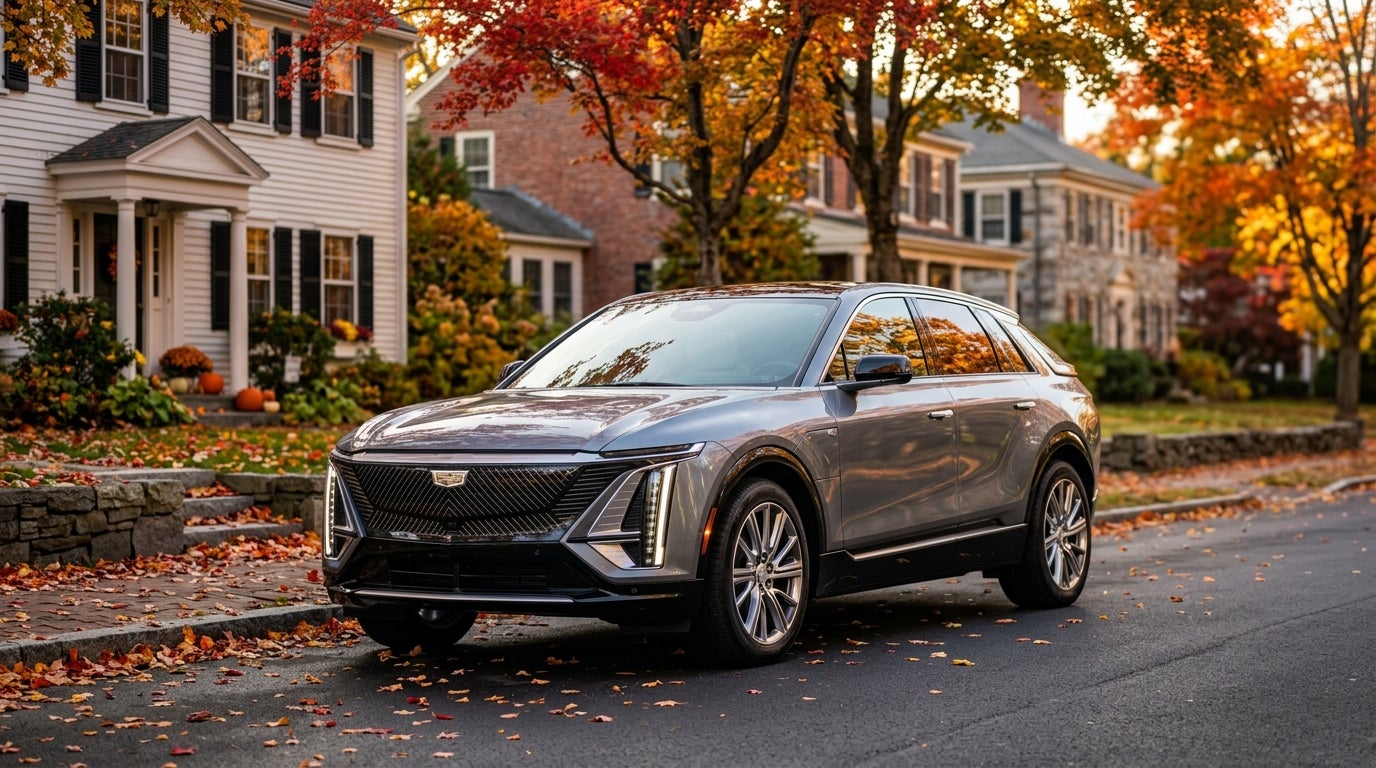
The 2027 Cadillac OPTIQ is best suited for families and professionals who want a fully electric luxury SUV with real-world range and refined technology. The rear-wheel drive Luxury trim starts at $49,995 and delivers up to 317 miles of EPA-rated EV range from an 89.4 kWh battery. Nine trims span from the Luxury to the performance-focused V-Series at $67,500, all sharing 300 hp (except the V-Series at 519 hp) and a 5-passenger, about 26 cu ft cargo layout. Table of Contents How Much Does the 2027 Cadillac OPTIQ Cost to Own? Design Elegance Reflecting Belmont's Suburban Green Spaces in the 2027 Cadillac OPTIQ Power and Range Built for Rolling Hills and Commutes in the 2027 Cadillac OPTIQ Spacious Cabin Comfort for Family Days Near Local Parks and Rivers in the 2027 Cadillac OPTIQ Connectivity That Keeps You Linked to Boston's Academic and Cultural Pulse in the 2027 Cadillac OPTIQ Advanced Safety Systems for Navigating Busy School Zones and Urban Streets in the 2027 Cadillac OPTIQ Comprehensive Pricing Breakdown of All 2027 Cadillac OPTIQ Trims Warranty, Maintenance, and Service Insights for 2027 Cadillac OPTIQ Owners Awards and Expert Recognition Highlighting the 2027 Cadillac OPTIQ's Excellence Frequently Asked Questions from Families About the 2027 Cadillac OPTIQ How Much Does the 2027 Cadillac OPTIQ Cost to Own? The 2027 Cadillac OPTIQ starts at $49,995 MSRP for the Luxury trim, with a $1,795 destination charge applying across every configuration. The nine-trim lineup gives buyers a clear path from an accessible entry point to a high-performance flagship, and the pricing table below captures every variant for which MSRP data is available. Feature Luxury Luxury AWD Premium Luxury Premium Luxury AWD Premium Sport Premium Sport AWD Sport Sport AWD V-Series Base MSRP $49,995 — $53,200 — $53,700 — $50,600 — $67,500 Destination charge $1,795 — $1,795 — $1,795 — $1,795 — $1,795 A few patterns are worth noting. The Sport trim at $50,600 sits just $605 above the Luxury and brings sport-tuned exterior styling, making it a compelling alternative for buyers who want a sharper look without a major price jump. The Premium Luxury and Premium Sport trims are closely spaced at $53,200 and $53,700 respectively, so the choice between them comes down to interior character versus exterior attitude rather than budget. The V-Series at $67,500 is a separate proposition entirely, offering 519 hp and 650 lb-ft of torque for buyers who want performance alongside luxury. AWD pricing for the Luxury AWD, Premium Luxury AWD, Premium Sport AWD, and Sport AWD trims is not published in the catalog data — contact Colonial Cadillac of Woburn for current figures on those configurations. Shoppers who want to compare specific in-stock configurations can browse our current new OPTIQ inventory to see what is available today and what options have been added to each unit. Design Elegance Reflecting Belmont's Suburban Green Spaces in the 2027 Cadillac OPTIQ The 2027 OPTIQ's exterior reads as a clean, contemporary luxury SUV — 189.8 inches long, 75.3 inches wide, and 64.7 inches tall — proportions that feel planted and purposeful without being oversized. The wheelbase measures 116 inches, which contributes to the composed stance that works equally well on tree-lined residential streets and in tighter urban parking situations. Flush door handles keep the body surfaces uninterrupted, while a roof spoiler adds a subtle aerodynamic note at the rear. Painted bumpers front and rear match the body color, and chrome bright trim frames the side windows on the Luxury and Luxury AWD, giving those trims a more traditional luxury character. The Sport and Premium Sport trims swap chrome for black window trim, a detail that shifts the visual tone toward something more assertive without changing the fundamental silhouette. Wheel choices start at 20-inch alloys across most trims. On Premium Luxury and Premium Luxury AWD, buyers can optionally step up to 21-inch Dark Gloss alloys, while Premium Sport and Premium Sport AWD offer optional 21-inch After Midnight wheels — a near-black finish that suits the sport-oriented character of those trims. A Black Painted Roof is available as a standalone option on several trims, adding a two-tone contrast that reads well against lighter exterior colors. Interior color choices differ by trim tier. Luxury buyers choose between Sky Cool Gray Inteluxe and Black Inteluxe synthetic leather. Premium Luxury and above open up Autumn Canyon Perforated Interluxe and Phantom Blue Perforated Interluxe alongside black and gray, giving the cabin a warmer or more expressive palette. Shoppers interested in a pre-owned OPTIQ can also explore our pre-owned luxury SUV inventory for earlier-model alternatives. Power and Range Built for Rolling Hills and Commutes in the 2027 Cadillac OPTIQ Every 2027 OPTIQ trim is a fully battery-electric vehicle with zero tailpipe emissions — an important distinction for buyers weighing long-term operating costs and sustainability. The powertrain story divides cleanly into two groups: the eight standard trims and the V-Series. The Luxury, Luxury AWD, Premium Luxury, Premium Luxury AWD, Premium Sport, Premium Sport AWD, Sport, and Sport AWD all share a 300 hp electric motor and 261 lb-ft of torque through a single-speed automatic. The V-Series steps up to 519 hp and 650 lb-ft. All trims draw from the same 89.4 kWh battery pack. Note: All trims share a single-speed automatic transmission. Fuel economy and range follow a consistent pattern based on drivetrain: Note: All trims share a 89.4 kWh battery. Rear-wheel drive trims deliver 317 miles of range, enough to cover a round trip from the western suburbs to downtown Boston and back many times over before needing a charge. AWD trims give up roughly 14 miles to gain dual-motor traction — a worthwhile trade for drivers who want extra confidence on slick pavement. The V-Series' 278-mile range reflects the energy demands of its substantially more powerful motor setup. For DC fast charging, the OPTIQ accepts up to 150 kW, which the catalog data shows can bring the battery from 10% to 80% in approximately 0.57 hours at maximum power. The standard onboard charger is 11.5 kW for Level 2 use, and an optional Charging Module 19.2 kW upgrade is available on all trims to reduce Level 2 charge times. Drivers trading in a current vehicle can get an online appraisal of their trade before visiting the showroom. Engine & Performance Powertrain specs by trim Feature Luxury Luxury AWD Premium Luxury Premium Luxury AWD:--:--:--:--:-- Horsepower 300 hp 300 hp 300 hp 300 hp Torque 261 lb-ft 261 lb-ft 261 lb-ft 261 lb-ft Drivetrain Rear-wheel drive All-wheel drive Rear-wheel drive All-wheel drive Engine & Performance (continued) Feature Premium Sport Premium Sport AWD Sport Sport AWD:--:--:--:--:-- Horsepower 300 hp 300 hp 300 hp 300 hp Torque 261 lb-ft 261 lb-ft 261 lb-ft 261 lb-ft Drivetrain Rear-wheel drive All-wheel drive Rear-wheel drive All-wheel drive Engine & Performance (continued) Feature V-Series:--:-- Horsepower 519 hp Torque 650 lb-ft Drivetrain All-wheel drive Standard across all trims: Transmission automatic 1-speed Fuel Economy Fuel economy and range by trim Feature Luxury Luxury AWD Premium Luxury Premium Luxury AWD:--:--:--:--:-- MPG 117 city / 93 hwy / 105 combined 110 city / 88 hwy / 99 combined 117 city / 93 hwy / 105 combined 110 city / 88 hwy / 99 combined EV range 317 mi 303 mi 317 mi 303 mi Fuel Economy (continued) Feature Premium Sport Premium Sport AWD Sport Sport AWD:--:--:--:--:-- MPG 117 city / 93 hwy / 105 combined 110 city / 88 hwy / 99 combined 117 city / 93 hwy / 105 combined 110 city / 88 hwy / 99 combined EV range 317 mi 303 mi 317 mi 303 mi Fuel Economy (continued) Feature V-Series:--:-- MPG 103 city / 81 hwy / 92 combined EV range 278 mi Standard across all trims: Battery (kWh) 89.4 Spacious Cabin Comfort for Family Days Near Local Parks and Rivers in the 2027 Cadillac OPTIQ Five passengers fit across two rows, with a 2+3 seating configuration that gives the front occupants bucket seats and the rear bench a 3-passenger split-folding layout. The numbers tell the practical story: front headroom is 39.6 inches, rear headroom is 38.7 inches, front legroom is 41.6 inches, and rear legroom is 37.8 inches. Front shoulder room measures 57 inches and rear shoulder room is 56 inches — nearly identical front to rear, which is unusual in this segment and benefits taller passengers sitting in the second row. Measurement Value Overall length 189.8 in Overall width (excl. mirrors) 75.3 in Overall width (incl. mirrors) 84 in Overall height 64.7 in Wheelbase 116 in Front track 64 in Rear track 64 in Ground clearance (unladen) 6 in Headroom (front) 39.6 in Headroom (rear) 38.7 in Legroom (front) 41.6 in Legroom (rear) 37.8 in Shoulder room (front) 57 in Shoulder room (rear) 56 in Hip room (front) 55 in Hip room (rear) 51 in Cargo (seats up) 26.0 cu ft Cargo (rear seat down) 57.0 cu ft Curb weight 5,192 lbs Towing capacity 1,500 lbs Payload 1,500 lbs Approach angle 17.7 deg Departure angle 26.6 deg Cargo volume is about 26 cu ft with all seats in place and expands to about 57 cu ft with the rear seat folded. The rear bench folds asymmetrically, which means one side can fold independently to accommodate a longer item while still seating a passenger on the other side. A hands-free liftgate, electric hatch pull-down with memory, and a cargo area light are all standard, making loading and unloading straightforward. Towing capacity is rated at 1,500 lbs — adequate for a small utility trailer, a loaded bike rack trailer, or a lightweight watercraft for outings along the Mystic River. Front seats are electrically adjustable with 6-way power movement, heated surfaces, and memory settings on the driver side. The Premium Luxury trim and above add ventilated front seats and heated rear seats, which are meaningful upgrades for families spending time in the vehicle through all four seasons. A 2-zone automatic climate control system is standard across all trims, with secondary ventilation controls accessible from the rear passenger position. Connectivity That Keeps You Linked to Boston's Academic and Cultural Pulse in the 2027 Cadillac OPTIQ A 33-inch diagonal curved display spans the instrument cluster and infotainment zones in a single sweeping panel, combining a reconfigurable TFT instrument cluster with a touchscreen infotainment interface. The Premium Luxury, Premium Luxury AWD, Premium Sport, Premium Sport AWD, and V-Series trims add a head-up display projected onto the windscreen, keeping navigation and speed data in the driver's sightline without requiring them to look away from the road. Audio is handled by a 19-speaker AKG system with a subwoofer and surround sound capability, standard across all trims. Steering wheel-mounted audio controls, satellite radio (36-month subscription included), AM/FM, digital radio, and internet radio are all standard. A single USB data connection is available at the front, supplemented by 3 USB charging ports in the front zone and 2 USB charging ports in the rear — five total charging connections across the cabin, which matters when multiple passengers are managing devices. Connectivity infrastructure is built around an embedded SIM card with an OEM data plan. A Wi-Fi hotspot is included for 3 months, and OnStar and Cadillac Connected services run for 96 months. Remote services — including remote lock/unlock, vehicle start, seat heating control, theft alert, find-my-car, and send-destination-to-car — are included for 36 months. Remote battery management, which allows monitoring of the battery state from a smartphone, is also included for 36 months. Super Cruise hands-free driver assistance is standard across all trims. This system provides hands-free highway driving with stop-and-go capability, lane-change assistance, and map-linked adaptive cruise control that anticipates curves. The system is linked to an 8-year extension option via the OnStar One with Super Cruise Plan add-on. Over-the-air OS updates keep the software current without requiring a service visit. Google Assistant voice activation is built in, and the system supports built-in apps and app control through the touchscreen. Navigation includes satellite view, touch controls, internet data feed, traffic information (96-month subscription), and EV intelligent route planning that accounts for charging stops on longer trips. Advanced Safety Systems for Navigating Busy School Zones and Urban Streets in the 2027 Cadillac OPTIQ The 2027 OPTIQ in Boston carries an 8-airbag system covering front, side, knee (driver and passenger), and side curtain positions front and rear. Front seat belts include pre-tensioners and height adjustment at both seating positions. All three rear seat positions use 3-point belts with pre-tensioners. ISOFIX child seat anchors are standard. Head restraints are height-adjustable at all five positions — 2 in front, 3 in rear. The active safety suite is consistent across all trims and includes several systems that work together in daily driving. Forward Collision Alert monitors the gap to the vehicle ahead and activates from 5 mph, providing visual and acoustic warnings. Automatic emergency braking engages at low speed front and rear, and the system activates brake lights as part of its collision response. A driver attention monitor watches for signs of inattention. Front cross-traffic collision avoidance uses radar and camera to detect crossing traffic at intersections, while rear cross-traffic collision avoidance uses camera-based detection when reversing. Automatic hazard lights activate during hard braking events. Blind Zone Steering Assist monitors the blind spots and can actively intervene with steering input to prevent unintended lane changes — a meaningful feature on multilane roads where merging traffic is unpredictable. Lane departure warning activates steering correction when the vehicle begins to drift. The autonomous drive suite includes Level 2 partial automation with active lane control, lane-change capability, traffic jam assist, and highway assist, all managed through Super Cruise. Parking is handled by HD Surround Vision, which provides a 3D-enhanced 360-degree camera view using front, rear, and side cameras and sensors. Full automatic perpendicular parking with exit capability is standard. A pedestrian audio warning system alerts those outside the vehicle when it is operating in electric mode at low speeds. An emergency call system and accident data recorder are also standard. The Euro NCAP test result for the Cadillac OPTIQ, Premium Sport, AWD configuration (tested October 2025) returned an overall 5-star rating, with an adult occupant score of 83, child occupant score of 81, pedestrian score of 76, and safety assist score of 74. Comprehensive Pricing Breakdown of All 2027 Cadillac OPTIQ Trims The nine trims in the 2027 Cadillac OPTIQ lineup in Boston divide into three character tiers: the Luxury and Sport entries prioritize value and style respectively; the Premium Luxury and Premium Sport mid-range trims add comfort and sport content; and the V-Series stands apart as the performance flagship. Trim MSRP Drivetrain EV Range Key Differentiators Luxury $49,995 RWD 317 mi Entry luxury, Sky Cool Gray or Black Inteluxe, 20-in alloys Luxury AWD Contact dealer AWD 303 mi All-wheel drive added to Luxury content Sport $50,600 RWD 317 mi Black window trim, sport exterior, Inteluxe upholstery Sport AWD Contact dealer AWD 303 mi AWD version of Sport Premium Luxury $53,200 RWD 317 mi HUD, ventilated front seats, heated rear seats, Perforated Interluxe, 4-color interior palette Premium Luxury AWD Contact dealer AWD 303 mi AWD version of Premium Luxury Premium Sport $53,700 RWD 317 mi Sport exterior with Premium Luxury comfort content, Onyx Package available Premium Sport AWD Contact dealer AWD 303 mi AWD version of Premium Sport V-Series $67,500 AWD 278 mi 519 hp, 650 lb-ft torque, performance-tuned AWD The $605 gap between Luxury and Sport is the smallest step in the lineup, making the Sport a strong choice for buyers who prioritize exterior presence. The $2,600 step from Sport to Premium Luxury buys a head-up display, ventilated seats, heated rear seats, and a wider interior color selection — a meaningful upgrade for families spending significant time in the vehicle. The $500 between Premium Luxury and Premium Sport reflects the sport trim's exterior and chassis character rather than added interior content. The V-Series commands a $13,800 premium over Premium Sport AWD for its performance powertrain. AWD pricing for the Luxury AWD, Sport AWD, Premium Luxury AWD, and Premium Sport AWD is not published in the catalog — contact Colonial Cadillac of Woburn directly for those figures. Warranty, Maintenance, and Service Insights for 2027 Cadillac OPTIQ Owners The 2027 Cadillac OPTIQ is backed by a 48-month/50,000-mile bumper-to-bumper warranty, a 96-month/100,000-mile battery warranty, and a 96-month/100,000-mile electric systems warranty. Cadillac roadside assistance coverage extends to 72 months or 70,000 miles — notably longer than the base vehicle warranty — which provides meaningful protection well into the ownership cycle. Anti-corrosion coverage runs for 48 months and 50,000 miles. A full-service warranty applies for the first 12 months. The battery chemistry is nickel cobalt manganese aluminium (NCMA) in a pouch cell format, supplied by LG Energy Solution and organized across 12 modules. This chemistry is well-regarded for its balance of energy density and thermal stability. For Level 1 charging at home, the OPTIQ accepts 120V/20A (1.4 kW). The standard Level 2 onboard charger handles 11.5 kW at 240V/48A, which the catalog data shows will charge the battery from 0% to 100% in approximately 8.54 hours. The optional Charging Module 19.2kW upgrade increases Level 2 charging to 19.2 kW at 240V/80A, reducing charge time to approximately 5.8 hours from 0% to 100%. For DC fast charging, the OPTIQ accepts up to 150 kW via a CCS (Combo) connector located on the front side of the vehicle. Colonial Cadillac of Woburn's service team is experienced with Cadillac EV systems. Owners can book a service appointment online at their convenience, and current service and parts offers are available on the dealership's website for additional savings on routine maintenance. Awards and Expert Recognition Highlighting the 2027 Cadillac OPTIQ's Excellence The 2027 Cadillac OPTIQ earned a 5-star overall rating from Euro NCAP, tested in October 2025 on the Premium Sport AWD configuration. The breakdown of that result is concrete and specific: adult occupant protection scored 83 out of 100, child occupant protection scored 81 out of 100, pedestrian protection scored 76 out of 100, and the safety assist score — which evaluates the active driver assistance systems — came in at 74 out of 100. A 5-star overall rating from Euro NCAP represents the highest possible classification and reflects well-rounded structural integrity combined with a comprehensive active safety suite. The OPTIQ is classified by the EPA as a Standard SUV 4WD and carries a ZEV (Zero Emission Vehicle) designation, with a combined CO2 output of 0 g/mile. For buyers in Massachusetts who qualify for state and federal EV incentives, the ZEV classification is a relevant ownership consideration. The OPTIQ sits in the upper-medium SUV segment globally and the compact SUV segment in the North American market, where it competes with vehicles like the BMW iX3, Mercedes-Benz EQB, and Genesis GV60 — each of which offers a comparable luxury-electric proposition at similar price points. Frequently Asked Questions from Families About the 2027 Cadillac OPTIQ Q: How far can the 2027 OPTIQ travel on a single charge? Rear-wheel drive trims — Luxury, Premium Luxury, Premium Sport, and Sport — are rated at 317 miles of EPA range. All-wheel drive versions of those trims (Luxury AWD, Premium Luxury AWD, Premium Sport AWD, and Sport AWD) are rated at 303 miles. The V-Series, with its 519 hp dual-motor AWD setup, delivers 278 miles. All trims share the same 89.4 kWh battery pack; the range difference reflects the energy demands of each powertrain configuration. Q: What charging equipment does the 2027 OPTIQ support? The OPTIQ accepts Level 1 (120V household), Level 2 (240V, standard 11.5 kW or optional 19.2 kW upgrade), and DC fast charging up to 150 kW via a CCS Combo port on the front side of the vehicle. At 150 kW DC fast charging, the catalog data shows a 10%-to-80% charge in approximately 0.57 hours. A GM J1772 AC Adapter and a GM CCS1 DC Adapter are available as dealer-installed options for expanded charging compatibility. A GM NACS DC to CCS Adapter is also available for access to NACS-equipped charging networks. Q: Does the OPTIQ have enough cargo space for a family of four with gear? Yes. With all five seats occupied, cargo volume is about 26 cu ft — enough for a full school run with bags, sports equipment, and groceries. Fold the rear seats and that expands to about 57 cu ft. The rear seat folds asymmetrically, so one side can accommodate a longer item while a passenger still occupies the other side. The hands-free liftgate and electric pull-down with memory make frequent loading practical. Q: Which trim adds the most meaningful comfort upgrades for family use? The jump from Sport or Luxury to Premium Luxury is where comfort features accelerate most meaningfully. Premium Luxury adds ventilated front seats, heated rear seats, a windscreen head-up display, and a broader interior color palette including Autumn Canyon and Phantom Blue. These are the features families notice on longer drives and during New England winters. Q: Where can I see and test drive a 2027 OPTIQ near Woburn? Colonial Cadillac of Woburn is located at 201 Cambridge Rd, Woburn, MA 01801. To check availability or ask about specific trim configurations before your visit, give the team a call at (781) 935-7000. © 2026 Colonial Cadillac of Woburn. All rights reserved.
How Often Should a 2026 Cadillac Undergo a Wheel Alignment Service

How Often Should a 2026 Cadillac Undergo a Wheel Alignment Service?

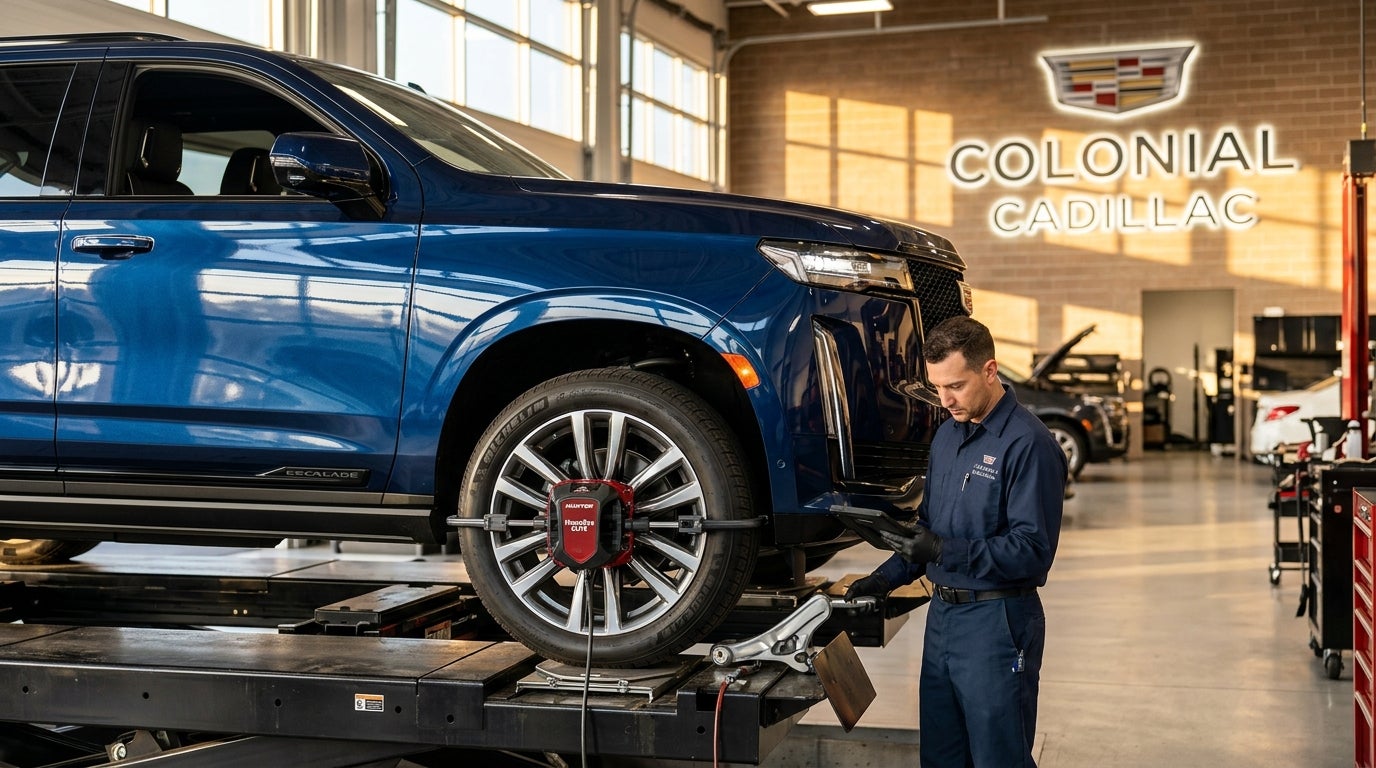
A 2026 Cadillac should undergo a wheel alignment check at least once every 12 months or between 12,000 and 15,000 miles under standard driving conditions. Vehicles should also be aligned immediately following a new tire installation, after any steering or suspension component replacement, or following a direct impact with severe road hazards like deep frost heaves and potholes. Maintaining precise wheel alignment is essential for preserving the quiet ride quality, responsive handling, and tread longevity designed into every modern Cadillac chassis. Alignment settings describe the precise angles at which your vehicle's wheels are mounted relative to the frame and the road surface. Over time, routine daily impacts—such as negotiating harsh road joints, striking curbs, or navigating broken pavement—slowly knock these settings out of factory tolerance. Many luxury vehicle owners coordinate alignment inspections alongside their standard 7,500-mile oil change and tire rotation schedules. Rotating tires every 7,500 miles helps distribute tread wear evenly, while periodic alignment verifications ensure the tire's contact patch meets the road at its ideal profile. When alignment angles drift even slightly, tires begin to scrub across the road surface rather than rolling cleanly, creating uneven tread patterns and prematurely shortening tire life. Drivers commuting daily from Belmont down into high-traffic urban corridors experience significant suspension stress from varied road conditions and rolling terrain. Commuters who regularly navigate these challenging surfaces often benefit from having their alignment checked every 6,000 to 10,000 miles to keep the steering system aligned to original factory parameters. To check your vehicle's current tracking status or discuss recurring maintenance schedules, you can reach our service team by giving us a quick call or visiting our service center on Cambridge Road for a quick digital alignment check. Table of Contents What Are the Primary Signs That Your Cadillac Needs an Immediate Alignment? Why Do Modern Cadillac Models and EVs Require a Four-Wheel Alignment? What Is the Price Difference Between Front-End and Four-Wheel Alignment? What Should a Complete Cadillac Suspension Inspection Include with Service? ​ Do Independent Shops Have the Technology to Align Cadillac EVs? ​ Quick Answers About Cadillac Alignment and Suspension Maintenance ​ Keeping Your Chassis Operating at Peak Performance ​ What Are the Primary Signs That Your Cadillac Needs an Immediate Alignment? The primary warning signs that a Cadillac requires an immediate wheel alignment include the vehicle pulling or drifting to one side while driving on a level road, an off-center steering wheel when traveling straight, persistent steering wheel vibration, and rapid or uneven tire tread wear. Promptly addressing these early indicators prevents minor mechanical drift from developing into costly tire replacement needs or suspension damage. Vehicle Drift or Pulling: If your vehicle consistently veers toward the left or right when you relax your grip on the steering wheel on a straight highway stretch, the chassis geometry has drifted away from neutral balance. Off-Center Steering Wheel: When driving straight ahead on a flat, level surface, the center crest on your steering wheel should sit perfectly horizontal. An emblem that cants off-center indicates that the front or rear toe alignment needs physical correction. Uneven Tread Wear Patterns: Inspecting your tire treads can reveal misalignment immediately. Feathering (where tread blocks feel smooth when rubbed one way but rough the other) or heavy wear concentrated exclusively on the inner or outer shoulder signals incorrect camber or toe settings. Steering Wheel Vibration: Slight oscillation or feedback felt through the rim during acceleration or cruising often points to misalignment coupled with front tire imbalance. Ignoring early mechanical signs allows severe tread cupping to develop, which introduces cabin noise and compromises wet-weather traction. Furthermore, driver assistance safety features like Super Cruise rely heavily on steering angle position feedback. When physical alignment shifts out of tolerance, automated lane-centering software must continuously compensate against steering pull, which can trigger system warnings or disable hands-free functionality until recalibrated. Why Do Modern Cadillac Models and EVs Require a Four-Wheel Alignment? Modern Cadillac sedans, crossovers, and electric vehicles require a comprehensive four-wheel alignment because they utilize multi-link independent rear suspensions and intelligent all-wheel-drive systems that require front and rear tire tracking to stay perfectly synchronized. Unlike older front-wheel-drive vehicles that relied on a fixed rear beam axle, modern chassis designs feature fully adjustable suspension linkages at all four corners. A proper four-wheel alignment verifies that all four tires form a true rectangle relative to the vehicle's centerline, ensuring the rear wheels track directly in line with the front wheels (thrust angle). If the rear thrust angle shifts, the rear axle pushes the tail of the vehicle slightly off-center. This forces the driver to hold the steering wheel crooked just to keep the car traveling straight—a condition commonly known as dog-tracking. Electric vehicles present unique chassis demands due to their heavy battery architecture and instant electric torque. The added curb mass places elevated vertical load on control arm bushings and ball joints, while rapid torque application puts continuous rotational stress on rear suspension links. Consequently, alignment tolerances on luxury EVs require strict precision to maintain stable high-speed tracking and minimize rolling resistance. Advanced active chassis technology also demands complete four-wheel calibration: Magnetic Ride Control: Adaptive dampers alter damping fluid viscosity milliseconds at a time based on wheel position sensors. Precise baseline geometry ensures shock absorber travel matches system software calculations. Four-Wheel Steering Systems: Models equipped with active rear-wheel steering rely on exact mechanical alignment before electronic calibration resets the rear steering actuators. Electric Power Steering (EPS): Electronic steering racks continuously compute returning force and torque feedback based on factory caster and toe baselines. ​ What Is the Price Difference Between Front-End and Four-Wheel Alignment? A basic two-wheel front-end alignment typically ranges from $50 to $75, whereas a comprehensive four-wheel alignment for a luxury vehicle usually costs between $100 and $230. The higher investment for a four-wheel alignment reflects the additional labor, precision computerized alignment technology, and electronic sensor resets required for modern independent rear suspension systems. Alignment Service Type Typical Cost Range Included Mechanical Focus Front-End Alignment (2-Wheel) $50 – $75 Adjusts front camber, caster, and toe angles only; limited to rigid rear axle designs. Four-Wheel Alignment $100 – $230 Adjusts all four wheels to original thrust line; recalibrates digital steering angle sensors. Front-end alignments adjust steering linkages on the front axle exclusively. While suitable for simple trucks or entry-level commuter cars with solid rear axles, two-wheel alignments are incomplete for modern luxury vehicles. Attempting a two-wheel alignment on a multi-link rear suspension leaves the rear thrust angle uncorrected, leading to premature inner-edge tire wear and persistent steering pull regardless of front-end adjustments. A four-wheel alignment involves attaching high-definition optical targets to each wheel rim, measuring all geometric angles against factory specifications, and physically adjusting lower control arms, eccentric bolts, and tie rods. Additionally, modern four-wheel alignment service includes an electronic steering angle sensor (SAS) reset using specialized service software to keep safety systems working in harmony with physical suspension adjustments. ​ What Should a Complete Cadillac Suspension Inspection Include with Service? A complete Cadillac suspension inspection performed alongside an alignment service must examine all structural hardware, rubber bushings, hydraulic dampers, and steering linkages for wear or damage. Attempting to align a vehicle with worn or compromised suspension components is ineffective, as play in ball joints or bushings allows alignment angles to shift as soon as the vehicle moves under its own weight. During a professional multi-point suspension check, factory-trained technicians systematically evaluate the following vital components: Control Arm Bushings & Ball Joints: Technicians check for cracked rubber, fluid leaks on hydraulic bushings, and excessive mechanical play in ball joints that support wheel spindle movement. Tie Rod Ends & Steering Gear: Inner and outer tie rods are tested for movement to ensure steering input directly alters wheel angle without sloppy feedback. Struts, Shocks, and Springs: Inspects hydraulic dampers for oil leaks and checks coil springs for fatigue or sagging, which alters baseline camber and caster angles. Sway Bar Links & Bushings: Verifies that anti-roll bar connections are firm to minimize excess body roll during cornering. Wheel Bearings & Mounting Hardware: Checks hub assemblies for lateral play or grinding noise that could compromise tracking stability. Combining a detailed mechanical assessment with periodic wheel alignment ensures that subtle component wear is caught before it leads to uneven tire wear or secondary steering component stress. Drivers planning seasonal routine maintenance can utilize our online service scheduling tool to select a convenient appointment time, and explore current service and parts specials prior to their arrival. ​ Do Independent Shops Have the Technology to Align Cadillac EVs? While many independent repair facilities possess standard wheel alignment equipment, aligning modern Cadillac electric vehicles often requires advanced high-capacity lifts, EV-specific frame reference data, and factory calibration tools that generic shops may not maintain. Electric luxury vehicles feature dense underbody battery structures and sophisticated driver-assist sensors that require specialized care. When servicing an electric vehicle, alignment racks must be rated for elevated curb weights and feature long ramp profiles that accommodate wide wheelbases without risking contact with low-slung battery shields. Furthermore, technician safety training is critical when working around high-voltage chassis components mounted adjacent to rear suspension adjustment points. The primary limitation faced by third-party facilities involves recalibrating electronic driver-assistance hardware following mechanical alignment adjustments: Steering Angle Sensor (SAS) Recalibration: Mechanical changes to front toe shift the physical zero point of the steering wheel, requiring an electronic reset of the steering rack software. ADAS Camera and Radar Realignment: Adjusting the rear thrust angle changes the physical path the car follows down the road. Forward-facing cameras and radar modules must be calibrated relative to this new thrust line. Chassis Leveling Systems: Air suspension and active damper systems must be locked into service mode using specialized software before measuring alignment angles. Drivers navigating urban road surfaces and winter-damaged pavement around Boston subject their vehicle chassis to significant road impacts. Ensuring that your vehicle is serviced using factory alignment software and OEM-approved calibration targets guarantees that all active safety and lane-centering features operate exactly as designed. ​ Quick Answers About Cadillac Alignment and Suspension Maintenance Q: How does misaligned steering affect Cadillac Super Cruise? Misalignment introduces subtle steering pull, forcing automated driving systems to work continuously against mechanical drift. When the steering angle sensor detects that physical vehicle travel does not match calculated steering inputs, Super Cruise may disengage or restrict availability until a full four-wheel alignment and sensor calibration are performed. Q: Is a wheel alignment necessary every time I buy new tires? While not strictly mandatory, performing a four-wheel alignment with every new tire installation is strongly recommended to protect your tire investment. Installing fresh rubber onto a vehicle with shifted toe or camber angles causes immediate, uneven tread scrubbing that permanently degrades tire performance and voids treadwear warranties. Q: How long does a four-wheel alignment service take to complete? A standard four-wheel alignment service usually takes between 60 and 90 minutes. This timeframe includes a pre-alignment test drive, a full multi-point suspension inspection, digital angle measurement, physical mechanical adjustments at all four wheels, steering angle sensor zero-point recalibration, and a final quality verification drive. Q: What is the main difference between tire balancing and wheel alignment? Tire balancing corrects heavy spots in the rotating tire-and-wheel assembly by adding small weights to the rim, eliminating high-speed steering wheel shimmy. Wheel alignment adjusts the mechanical angles of the suspension system relative to the chassis and road, ensuring even tread wear and straight-line tracking. Q: Will driving over road hazards frequently ruin my vehicle's alignment? Yes, striking deep frost heaves, sharp pavement drops, or curb edges exerts severe force on suspension arms and tie rod threads. Over time, these sudden impacts alter factory camber and toe settings, making periodic alignment verifications essential for drivers who regularly travel on rough road surfaces. ​ Keeping Your Chassis Operating at Peak Performance Maintaining correct alignment angles protects your tires, optimizes power delivery, and preserves the refined handling performance expected of a modern Cadillac. Regularly scheduling suspension inspections alongside routine tire rotations ensures that minor alignment shifts are corrected long before they impair driver assistance systems or cause premature tire wear. When you notice your vehicle pulling to one side or observe uneven tread wear across your tires, our certified service team is ready to restore your vehicle to factory specifications. To arrange your next alignment check, contact our service team by giving us a quick call or getting directions to Colonial Cadillac of Woburn today. © 2026 Colonial Cadillac of Woburn. All rights reserved.