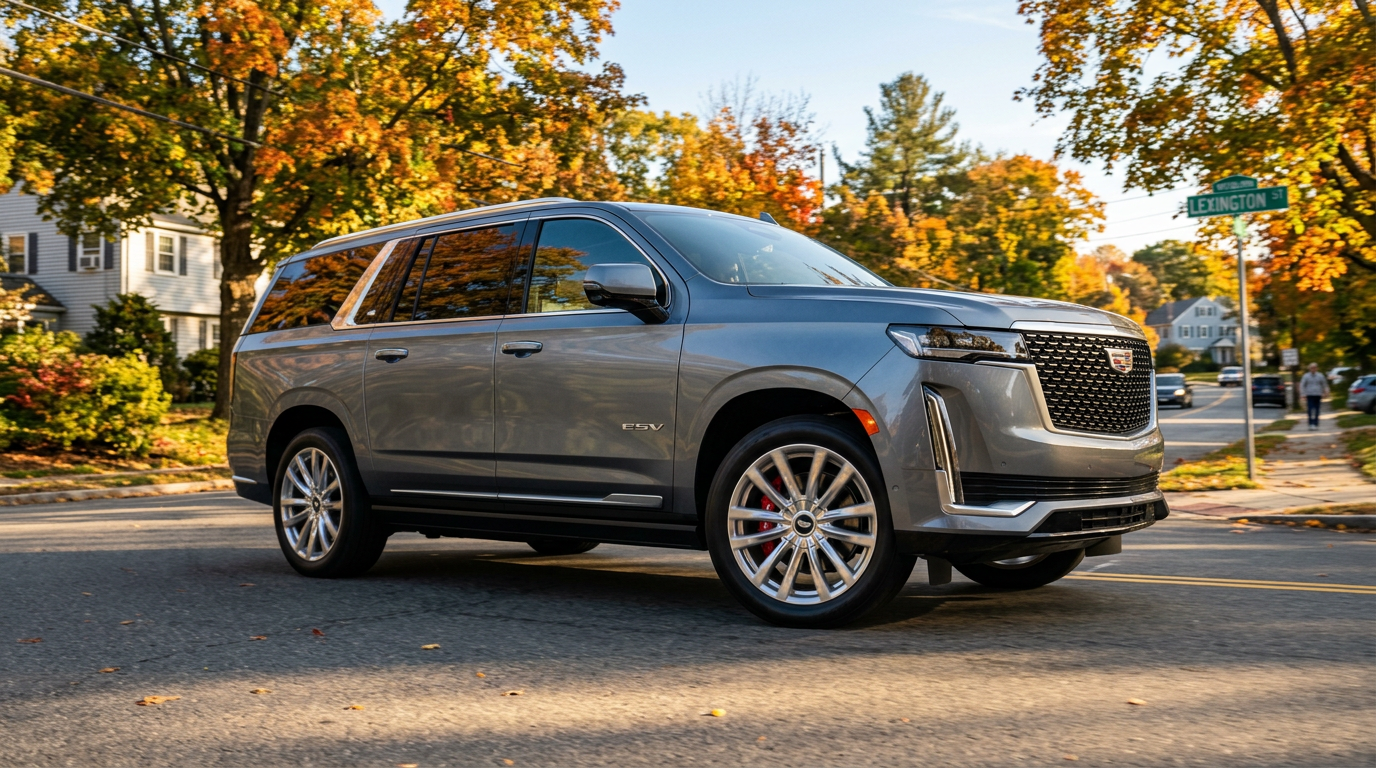
Operating a full-size luxury SUV with a robust 6.2L V8 engine requires a braking system engineered to handle substantial kinetic energy. The standard 2026 Cadillac Escalade gasoline model possesses a maximum towing capacity of 8,100 lbs, meaning the friction surfaces must dissipate extreme heat during deceleration, especially when hauling heavy loads. Regular maintenance of these components is not merely a matter of vehicle longevity; it directly preserves the sophisticated safety systems engineered into the platform.
The advanced driver-assistance technologies on this vehicle rely heavily on a perfectly calibrated braking system to function safely. Features such as Enhanced Automatic Emergency Braking, Intersection Automatic Emergency Braking, and Reverse Automatic Emergency Braking execute split-second stops by calculating precise rotor friction and hydraulic pressure. If the brake pads are worn or the hydraulic fluid is degraded, the physical response of the vehicle may lag behind the electronic commands of the safety system, potentially compromising safety on busy highways.
To keep these safety features operating at peak performance, our factory-trained technicians utilize specialized diagnostic equipment to inspect and service every component of the braking system. For drivers commuting from nearby Belmont, stopping by for a routine brake inspection ensures that your luxury SUV remains prepared for both daily school drop-offs and weekend road trips. If you suspect your braking performance has changed, you can reach our service department directly by giving our team (781) 935-7000 a quick call. For those ready to bring their vehicle in for professional care, our team is conveniently located at 201 Cambridge Rd, Woburn, MA 01801, where we provide certified Cadillac service.
Table of Contents
- Understanding the Standard Brake Specifications of Your 2026 Escalade
- How Many Miles Do Cadillac Escalade Brake Pads Typically Last?
- Recognizing the Early Warning Signs Your Escalade Needs Brake Service
- What to Expect: How Long Does Escalade Brake Service Take?
- Common Questions About Servicing Your 2026 Cadillac Escalade Brakes
Understanding the Standard Brake Specifications of Your 2026 Escalade
What are the physical dimensions and technologies that bring this luxury vehicle to a halt? The standard gasoline-powered model is equipped with 4-wheel antilock disc brakes featuring specialized DuraLife brake rotors. These rotors undergo a patented gas-nitriding process that hardens the rotor surface, significantly reducing rust formation and preventing the steering wheel shudder often caused by uneven rotor wear.
The physical dimensions of the braking system are precisely matched to the weight distribution of the vehicle. A standard gasoline model utilizes 13.5-inch vented front disc brakes paired with 13.6-inch vented rear disc brakes. This setup provides a balanced distribution of stopping force. For those driving the high-performance V-Series, the system is upgraded to massive Brembo 6-piston Performance Front Brakes with color-matched rear calipers to manage the extreme output of the supercharged engine.
Additionally, the braking architecture is supported by electronic systems designed to optimize pedal feel and control. The standard package includes Brake Assist for emergency stops, an Electronic parking brake, and Automatic Vehicle Hold, which allows you to remove your foot from the pedal at long traffic lights. Keeping these systems synchronized requires specialized knowledge and genuine OEM parts. When your luxury SUV is due for a checkup, you can secure an appointment using our convenient online service scheduler to select a time that fits your calendar.
How Many Miles Do Cadillac Escalade Brake Pads Typically Last?
How long can you expect your brake pads to perform before requiring a replacement? On average, original equipment manufacturer (OEM) brake pads on a full-size luxury SUV last between 30,000 and 70,000 miles. The exceptionally wide range is due to the fact that brake wear is highly dependent on individual driving habits, vehicle load, and local operating conditions.
Heavy stop-and-go traffic accelerates pad wear significantly compared to highway cruising. For example, a professional commuting daily into Boston will experience much faster brake degradation due to constant stop-start cycles on congested city streets than someone driving primarily on open expressways. Furthermore, regularly utilizing the maximum towing capacity of 8,100 lbs places immense thermal stress on the front and rear pads, which will naturally shorten their operational lifespan.
Our service team recommends having your brake pads inspected during every routine tire rotation, or roughly every 7,500 miles. During this inspection, a technician will measure the remaining friction material on the pads. Catching thin pads early prevents metal-on-metal contact, saving you from the more expensive prospect of replacing your DuraLife brake rotors prematurely.
Recognizing the Early Warning Signs Your Escalade Needs Brake Service
Are you wondering how to detect brake wear before it becomes a safety hazard? The most direct indicator is the built-in brake lining wear indicator feature. This electronic system monitors the thickness of your brake pads and displays an automated warning message on your 55″ Horizon Display when the friction material has worn down to a critical level, alerting you that service is required.
Beyond the electronic dashboard alerts, there are several physical symptoms of brake wear that you can detect during daily driving:
- Squealing or Squeaking: A high-pitched metallic noise when applying the brakes is often caused by a small metal wear indicator built into the pad, designed to rub against the rotor as a physical warning.
- Grinding Noises: A harsh, scraping sound indicates that the friction material is entirely gone, and the metal backing plate of the pad is grinding directly against the rotor. This requires immediate service to prevent catastrophic rotor damage.
- Pedal Pulsation or Vibration: If the brake pedal or steering wheel shakes when you slow down, the rotors may have developed thickness variations or accumulated uneven pad deposits.
- Spongy Pedal Feel: A brake pedal that feels soft or sinks slowly to the floorboard often points to air in the hydraulic lines or degraded brake fluid.
Ignoring these early warning signs can lead to reduced stopping power and damage to surrounding suspension components. To make maintaining your luxury vehicle more convenient, we regularly update our selection of service and parts specials to provide competitive offers on essential maintenance items like pads, rotors, and fluid exchanges.
What to Expect: How Long Does Escalade Brake Service Take?
How much time should you plan to spend at the dealership when bringing your vehicle in for brake maintenance? A standard brake service—which typically includes replacing the front or rear brake pads and resurfacing or replacing the rotors—generally takes between two and three hours. This timeframe allows our certified technicians to complete the mechanical work and perform necessary electronic calibrations.
Because modern luxury SUVs utilize advanced electronic braking systems, the replacement process involves more than just turning wrenches. Technicians must service the Electronic parking brake system, reset the electronic brake lining wear indicator, and test the hydraulic pressure of the system. A road test is also performed to properly bed in the new brake pads, ensuring optimal friction and quiet operation from the moment you leave our facility.
If your vehicle requires a full four-wheel brake replacement, or if the hydraulic fluid needs to be completely flushed and replaced, the service may take closer to four hours. We recommend scheduling an appointment in advance to minimize your wait time. Our service advisors will keep you updated on the progress of your vehicle, allowing you to plan your day with minimal disruption.
Common Questions About Servicing Your 2026 Cadillac Escalade Brakes
Q: Can I use aftermarket brake pads on my luxury SUV?
While aftermarket pads are available, we highly recommend using genuine OEM Cadillac brake parts. OEM pads are specifically engineered to match the weight, thermal dynamics, and noise-damping requirements of your vehicle. Non-OEM pads can lead to increased brake dust, squealing, and premature wear on your DuraLife brake rotors.
Q: Does the cold winter weather affect my brakes?
Yes, local winter conditions can impact your braking system. Heavy road-salt usage on winter roads can accelerate corrosion on metal brake components, potentially leading to sticking calipers or uneven rotor wear. Regular undercarriage washes and seasonal brake inspections help mitigate these cold-weather risks.
Q: What is brake-by-wire, and does it change how my brakes are serviced?
The brake-by-wire system uses electronic sensors to read pedal pressure and electronically command hydraulic pressure to the calipers. This creates a highly consistent pedal feel, but it also means the system must be properly calibrated using specialized diagnostic tools during any brake service to ensure the electronics and hydraulics remain perfectly synchronized.
Q: How often should the brake fluid be changed?
Cadillac generally recommends replacing the brake fluid every two years or 45,000 miles, whichever comes first. Brake fluid is hygroscopic, meaning it absorbs moisture from the air over time. This moisture lowers the boiling point of the fluid, which can lead to a spongy pedal feel and internal corrosion of the ABS valves under heavy braking conditions.
Q: What should I do if my brake warning light comes on while driving?
If the red brake warning light illuminates, pull over safely as soon as possible. Check your owner’s manual or contact roadside assistance immediately. If the light is amber, it typically indicates a non-emergency issue like a worn pad warning or an ABS sensor fault, meaning you should schedule a service appointment promptly. For immediate assistance, you can call our service department or get driving directions to our specialized facility for a professional diagnostic check.
© 2026 Colonial Cadillac of Woburn. All rights reserved.
Connect with us